MD Acadia & Special Areas Irrigation

MD of Acadia & Special Areas Irrigation Project

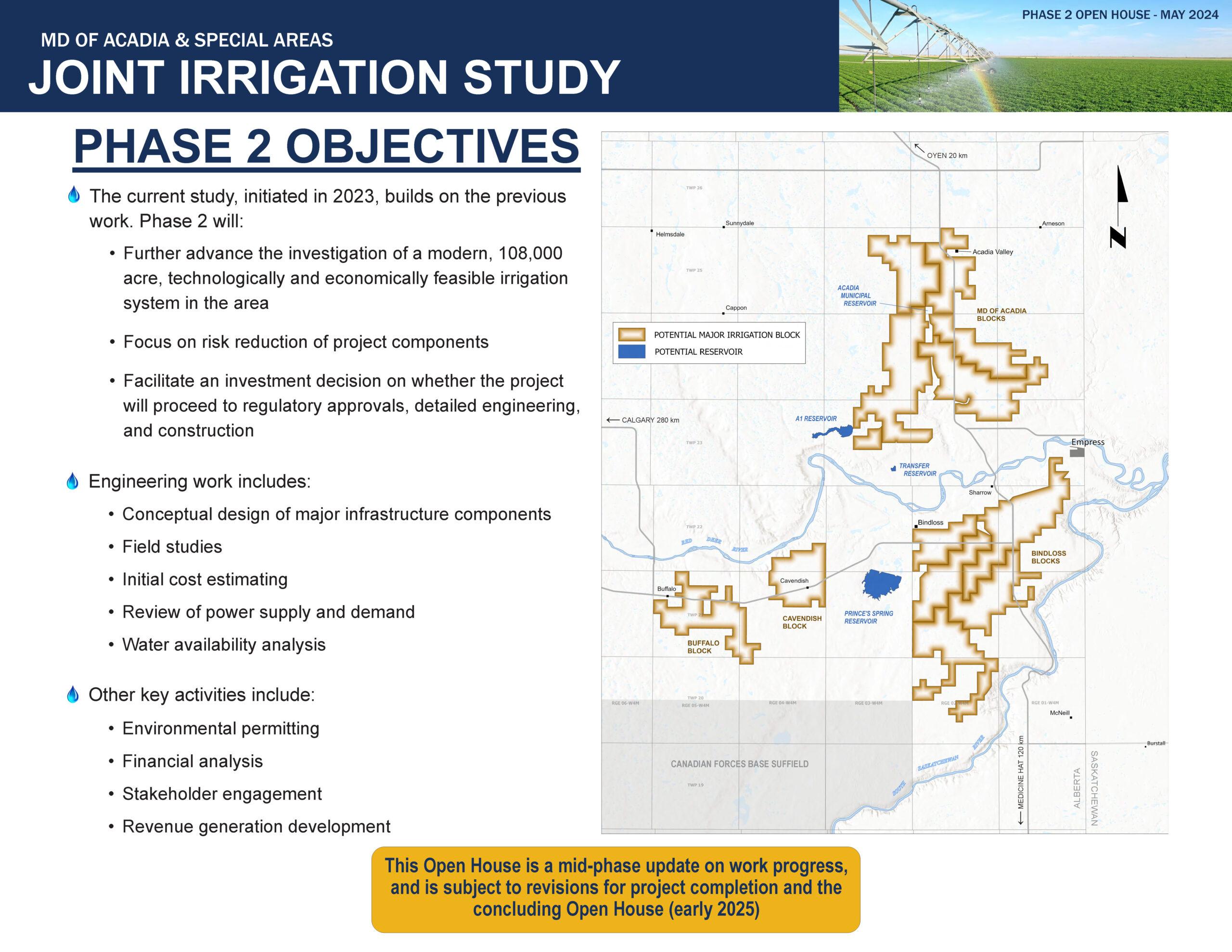
The MD of Acadia & Special Areas Irrigation Project is an irrigation expansion project in east-central Alberta that will transition 108,000 acres from dryland farming to irrigated farming and support the future growth of Canada’s agriculture sector.


Irrigation infrastructure can play a transformative role in Alberta’s rural economy – creating new opportunities for producers by providing increased water storage, stability through periods of drought, increased food security, and long-term economic growth. In a region that is prone to prolonged periods of drought, this project will give local producers a chance to better build for our collective futures and contribute to the revitalization of our communities. The project promises to improve economic and social stability in the east-central Alberta, while growing and diversifying the economy.


Irrigation supports more than just the farmers who can access it. This project will support secondary and value-added processing for dryland farmers in the region and will provide security for ranchers through access to dependable feedstocks and forage. The MD of Acadia & Special Areas Irrigation Project will also help grow the agri-food sector and support a diversified value-added processing industry. All of this will also lead to greater food security for our region and beyond, which in turn will lead to economic stability, environmental sustainability, and healthier communities overall.


The project is being developed in partnership with all levels of government including the Government of Canada through the Canada Infrastructure Bank, the Government of Alberta, Municipal District of Acadia No. 34, and the Special Areas Board. The project partners are investing $7 million to continue Phase II of the planning, including completion of preliminary engineering design, environmental and regulatory considerations, and potential financing options.


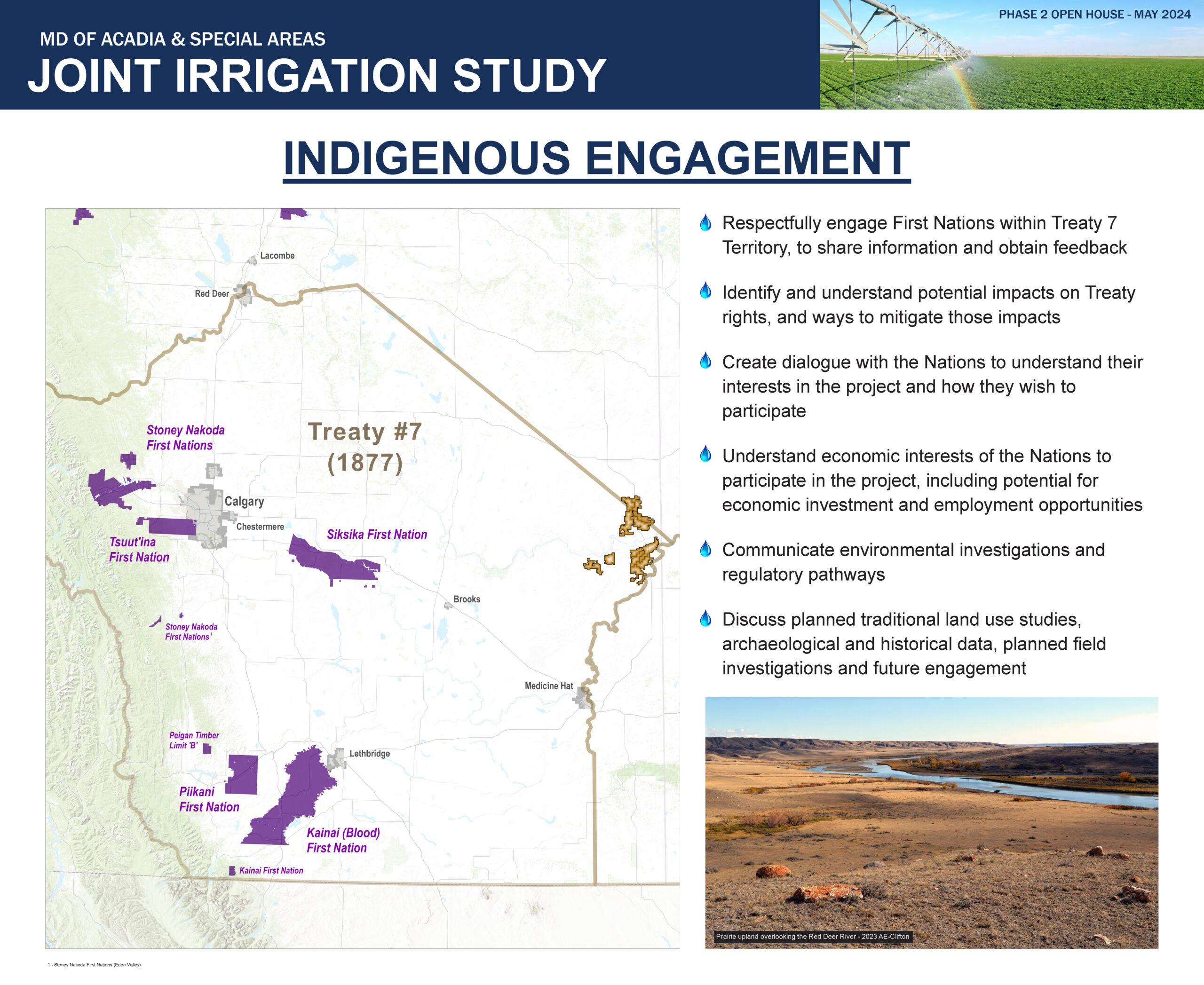
Project partners are committed to transparency and meaningful engagement with all stakeholders including First Nations, local producers, municipalities, and other groups throughout feasibility work.


This page will be updated with new information on the project as it becomes available. Sign up for our newsletter here to receive project updates.
Final Terms of Reference – EIA

MD of Acadia and Special Areas Joint Irrigation Project Final Terms of Reference for Environmental Impact Assessment


The Terms of Reference are dated October 10, 2025, and have been issued by Alberta Environment and Protected Areas under Section 48(3) of the Environmental Protection and Enhancement Act.


The purpose of this document is to identify for the Municipal District of Acadia (MD of Acadia), Special Areas Board, the public, Indigenous communities and appropriate stakeholders the information required by government agencies for an Environmental Impact Assessment (EIA) report prepared under the Environmental Protection and Enhancement Act (EPEA) for the MD of Acadia and Special Areas Joint Irrigation Project (the Project).


A copy of the Final Terms of Reference is available in pdf format.


For further information on the MD of Acadia and Special Areas Joint Irrigation Project or contact:

  • MD of Acadia and Special Areas Joint Irrigation Project
    c/o Special Areas Board Communications
    Box 820, 212-2nd Avenue West,
    Hanna, AB T0J 1P0
    Email: public.input@specialareas.ab.ca
    Phone: 403 854 5611

Project Updates

Check out our project updates for a recap on recent work completed and information on upcoming project work.


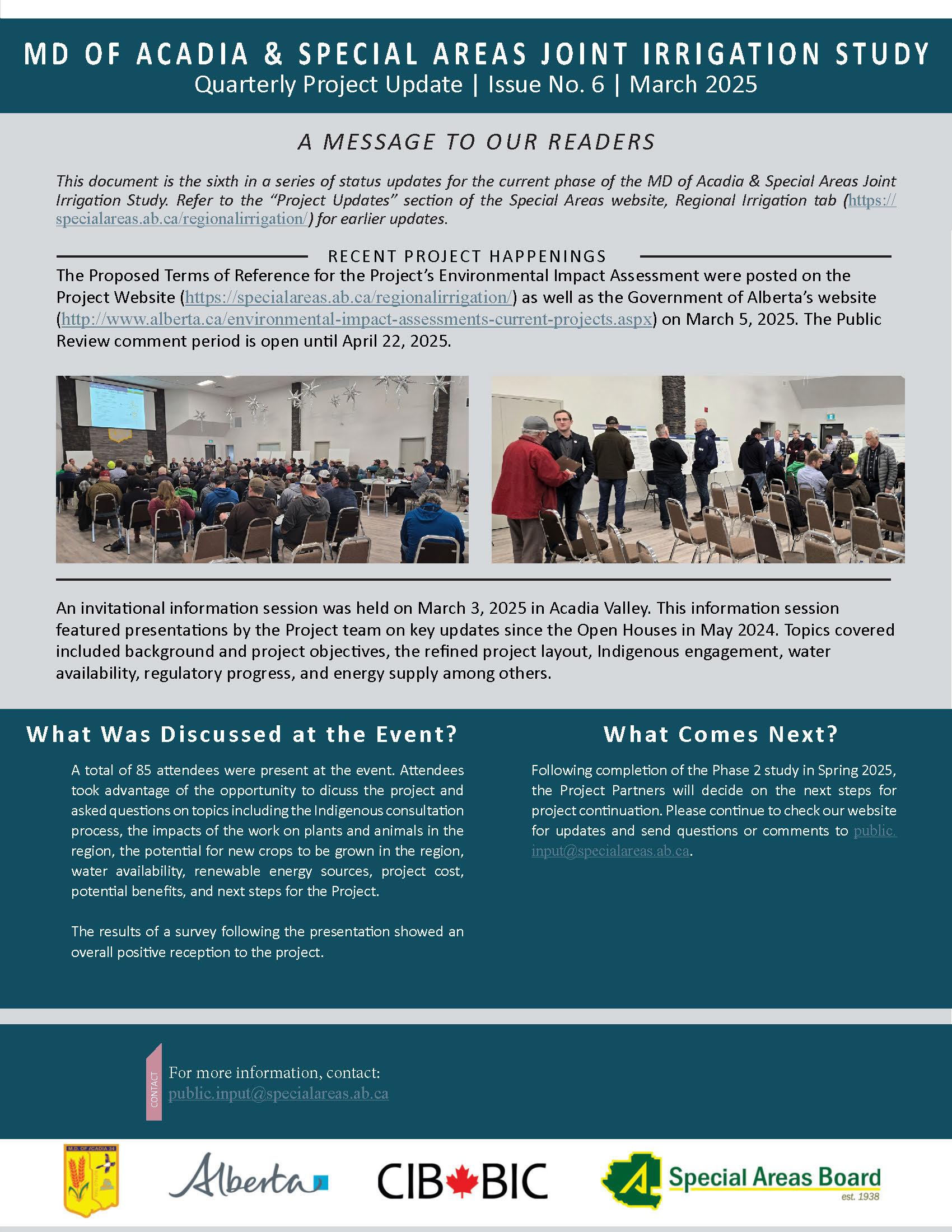
March 2025 Project Update

November 2024 Project Update

August 2024 Project Update

May 2024 Project Update

February 2024 Project Update

December 2023 Project Update

Frequently Asked Questions

What is the MD of Acadia & Special Areas Irrigation Project?

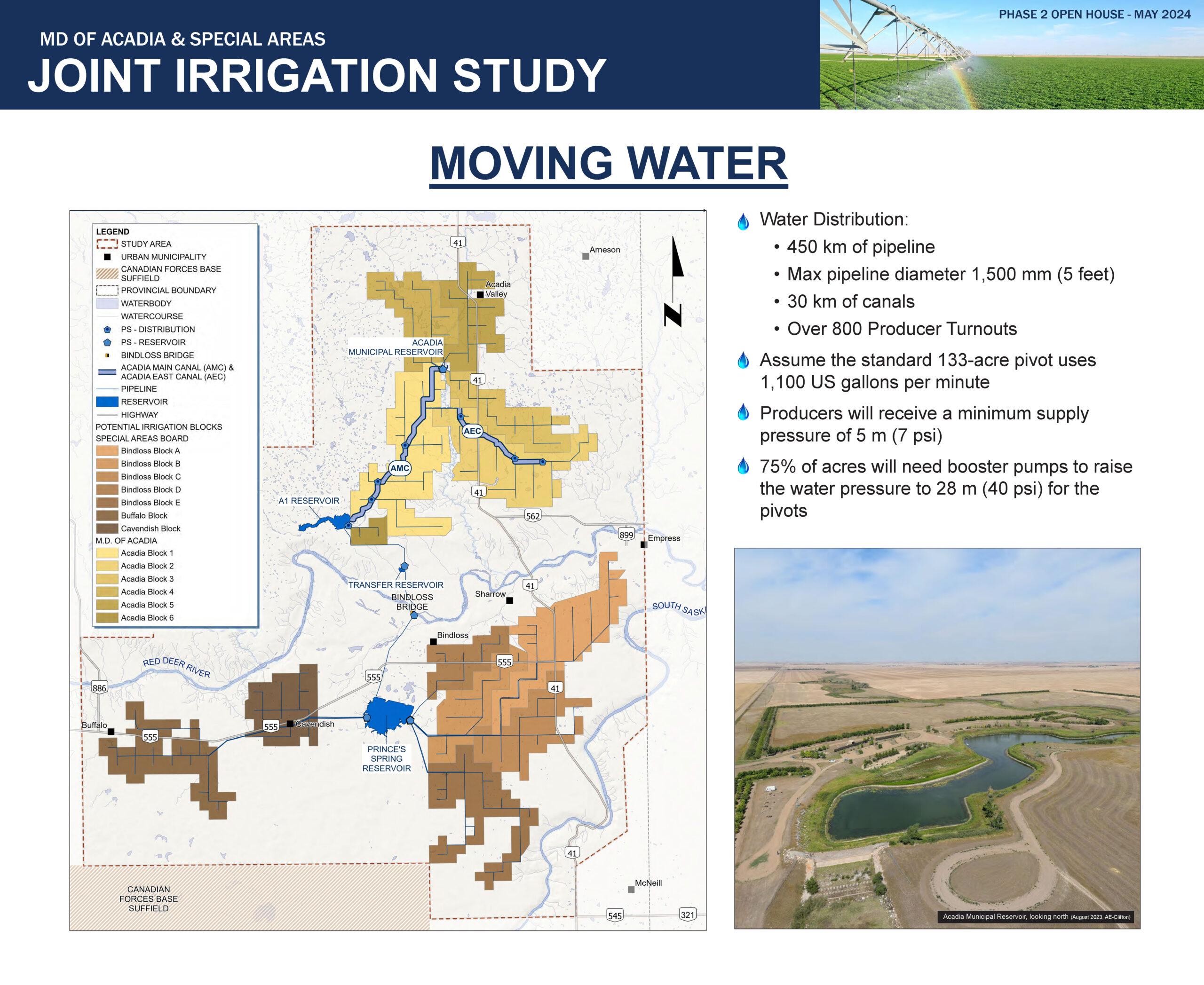
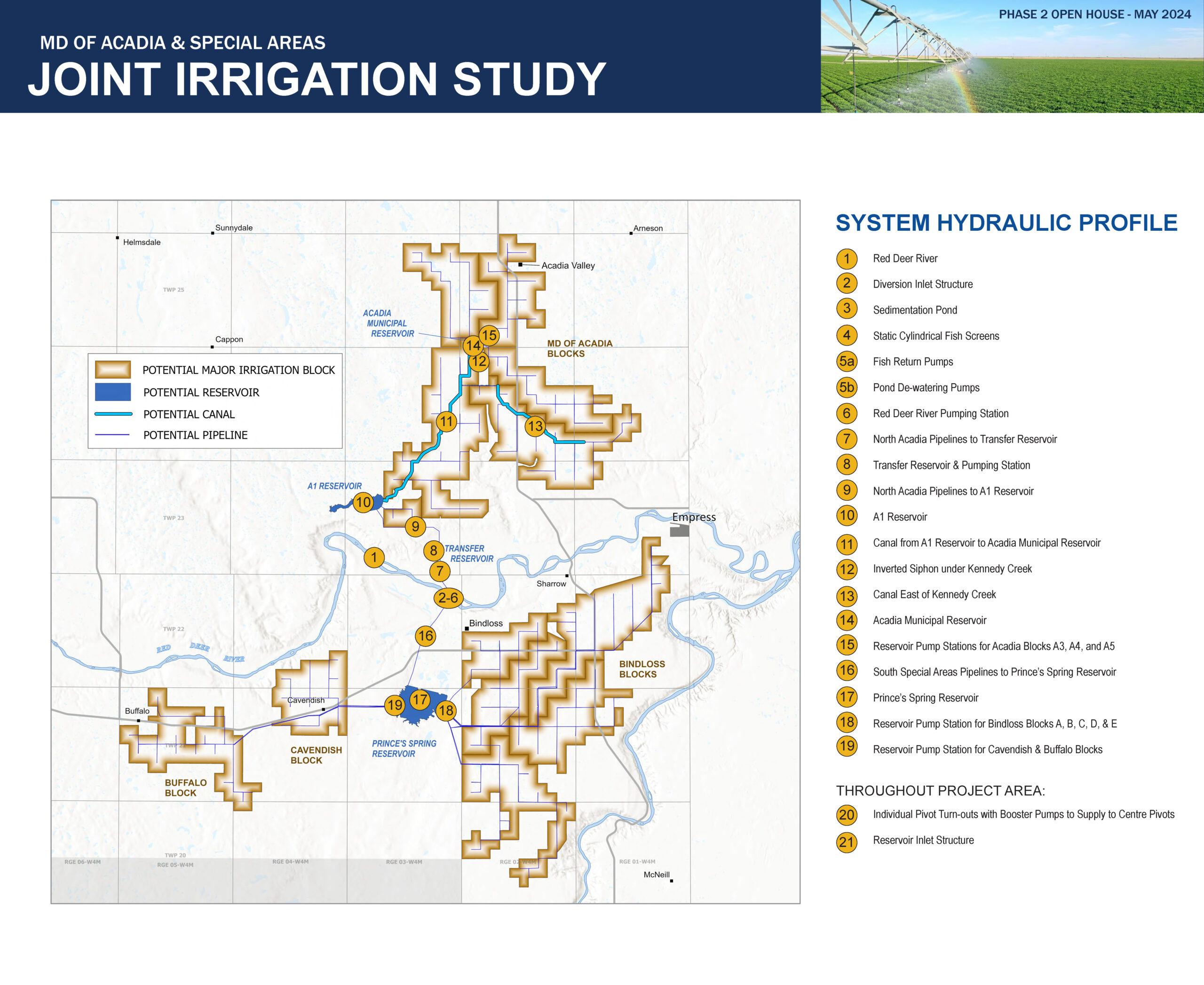
The MD of Acadia & Special Areas Irrigation Project will support the transition of approximately 108,000 acres in east-central Alberta from dryland farming to irrigated farming. It will develop modern irrigation infrastructure on previously cultivated lands with the right agro-climatic conditions and access to water for irrigation.


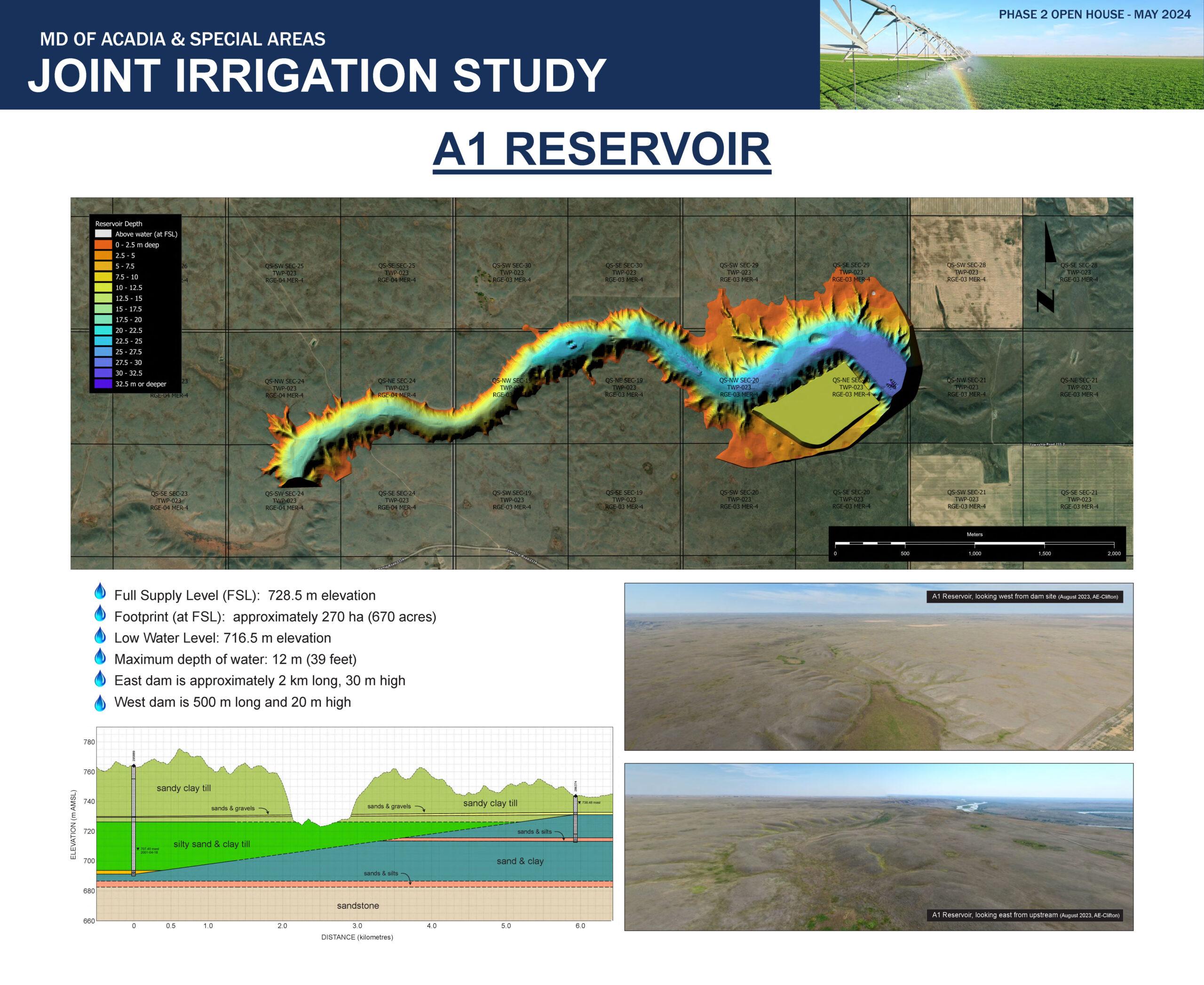
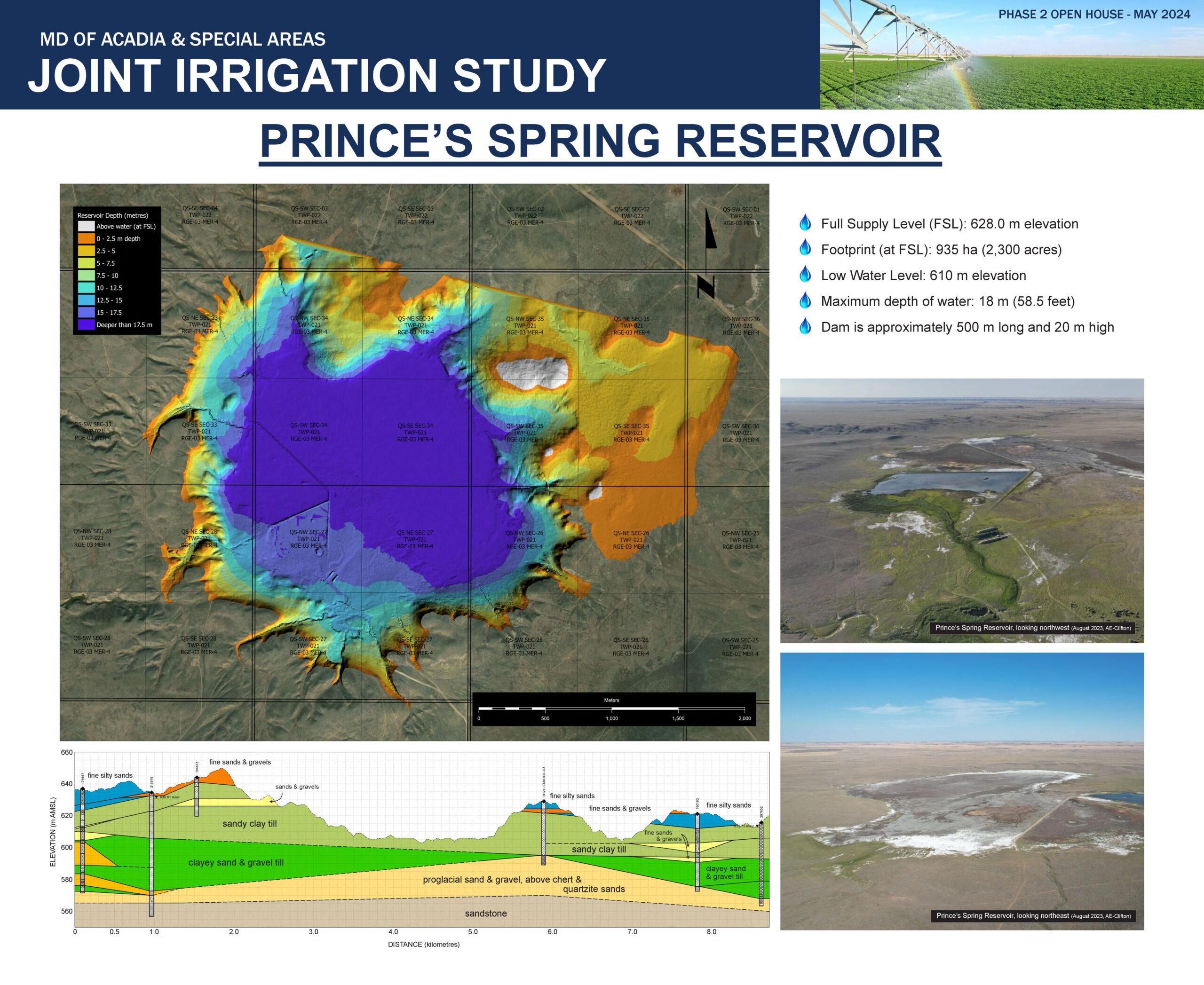
It will also create new reservoirs to support effective management of water needed for irrigation while providing new recreational opportunities and creating new fish and waterfowl habitats.


In all, the project promises to revitalize our region’s economy by providing new opportunities for employment and economic activity while mitigating the impacts of climate change felt across our communities.

What economic impact is the project expected to have?

A 2021 economic impact study [Economic Value of Alberta’s Irrigation Districts – Alberta Irrigation Districts Association] found that Alberta’s irrigation districts support approximately 46,000 jobs and contribute $5.4 billion in GDP to the provincial economy.


The MD of Acadia & Special Areas Irrigation Project is expected to contribute more than $3.9 billion in GDP over its lifetime and generate 5,650 person-year jobs during construction alone. Once constructed, additional jobs in operations and maintenance, incremental crop production, and new agri-food developments will be created.


The project could also help to mitigate depopulation trends in the region and help create a future for one of the few regions in the province that is forecasted to decline in population in the future (15.5% decline for the region vs. 42.2% growth for the province).

What impact will this project have on the Red Deer River basin?

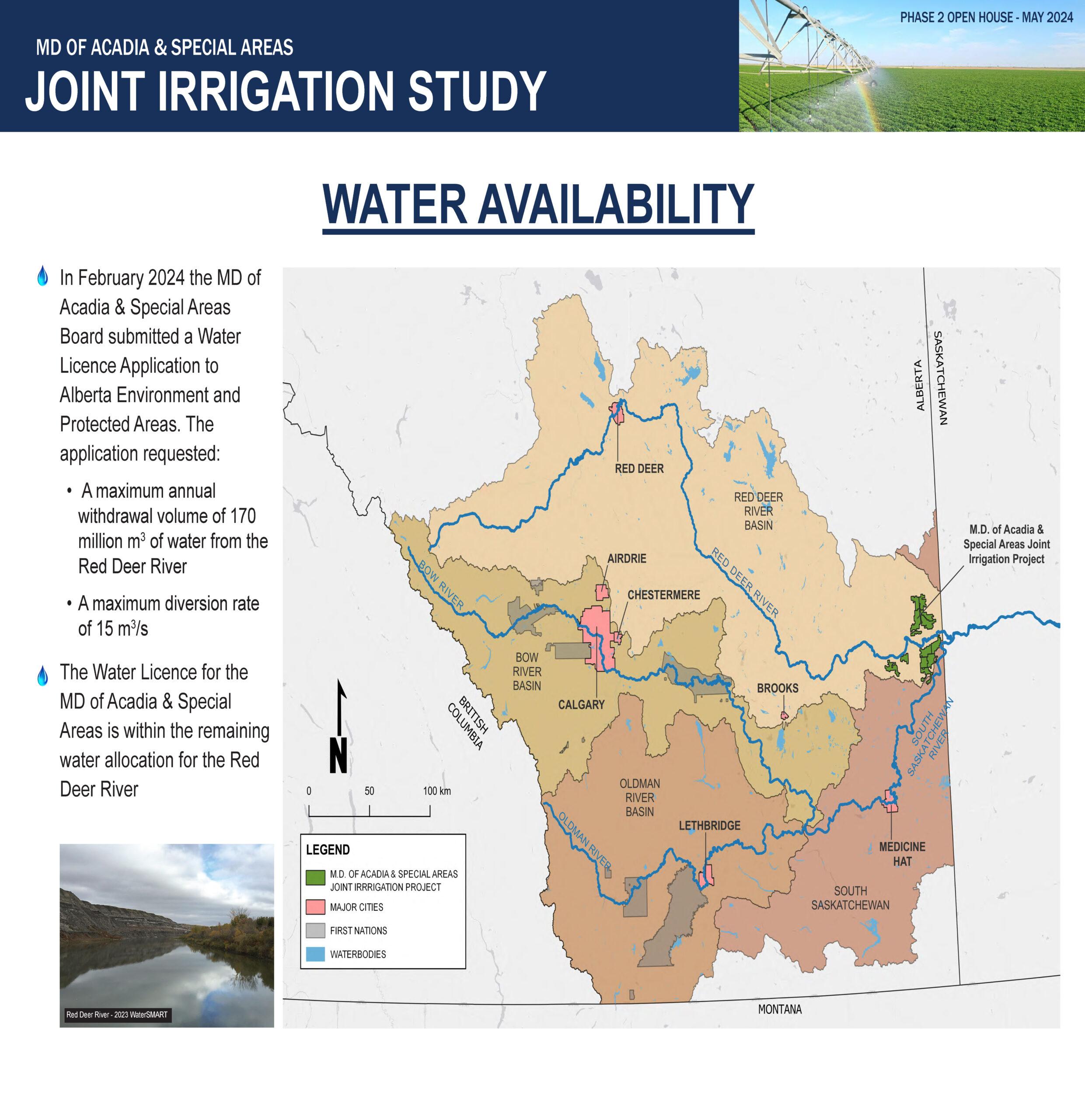
As part of the study conducted to assess the project’s feasibility, water availability was investigated to understand the potential impacts to the Red Deer River basin. It was determined that there is sufficient water available in the Red Deer River Basin to support an irrigation project of this scope and scale.


More information on water allocations and impacts to the Red Deer River basin is expected to be made available as further design work on the project is conducted.

What does the stakeholder engagement process look like?

We are committed to transparency and meaningful engagement with all stakeholders impacted by the MD of Acadia & Special Areas Irrigation Project, and we have been hard at work engaging with First Nations, local producers, and other impacted groups though the project’s feasibility work.


We have been and will continue to use the robust processes set out by the both the federal and provincial governments on projects like these.

Why are the Special Areas Board and the MD of Acadia working together on this project?

Both the Special Areas Board and the MD of Acadia are committed to finding opportunities to help stabilize the region and support economic growth. Feasibility work associated with the MD of Acadia & Special Areas Irrigation Project was intended to look at the region as a whole, not just the MD of Acadia or Special Areas.


Both municipalities see the value in working together to see what could be possible for our region, as the benefits of a project like this are seen well beyond the individual producer. Other industries, like the service, processing, and agri-foods sectors all stand to benefit from bringing large-scale irrigation to the region.

How can I provide my input?

Stakeholders are encouraged to register their emails if they would like to be added to the local municipal update mailing list.


You can register by emailing: public.input@specialareas.ab.ca. There will also be opportunities to participate in a variety of stakeholder engagement activities as the project develops.

Past Events

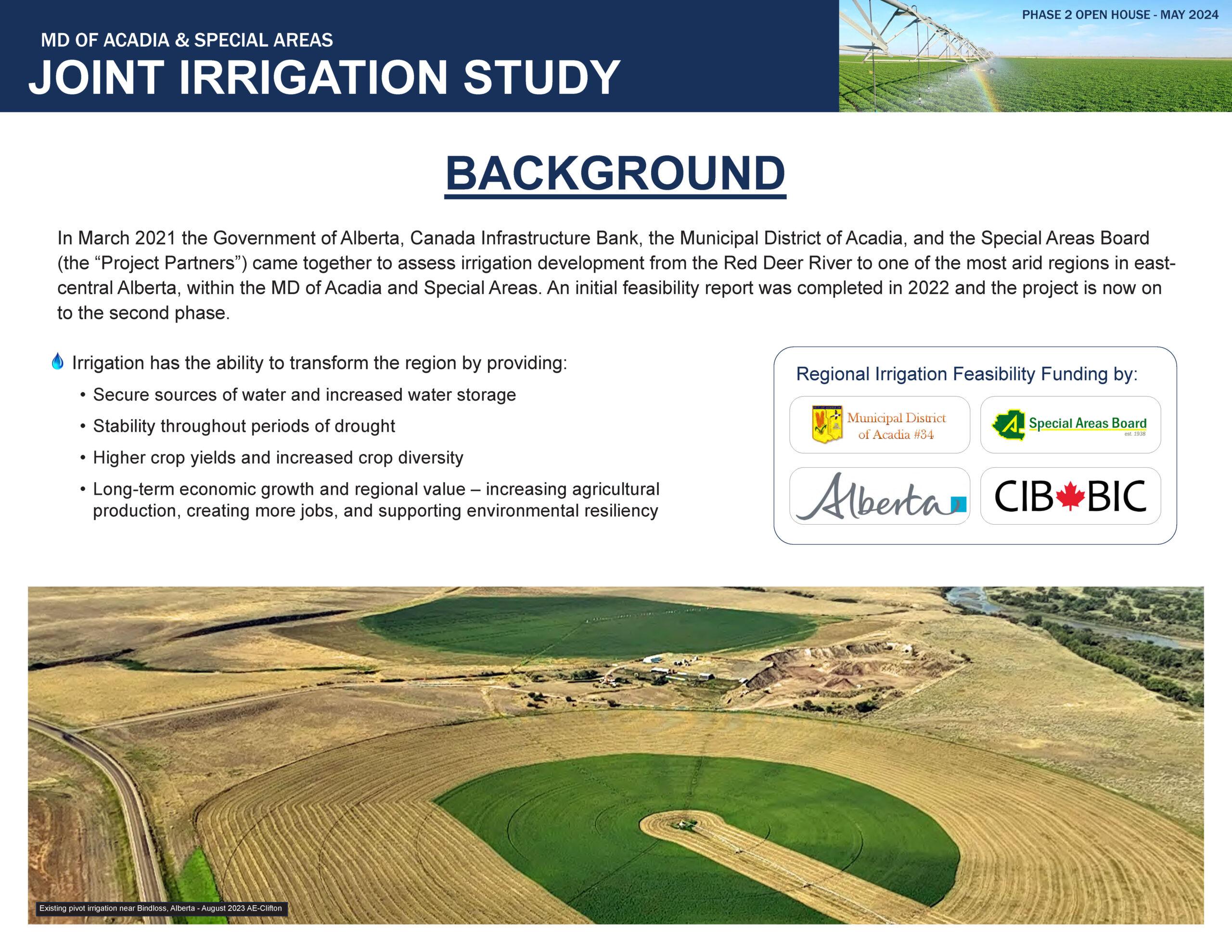
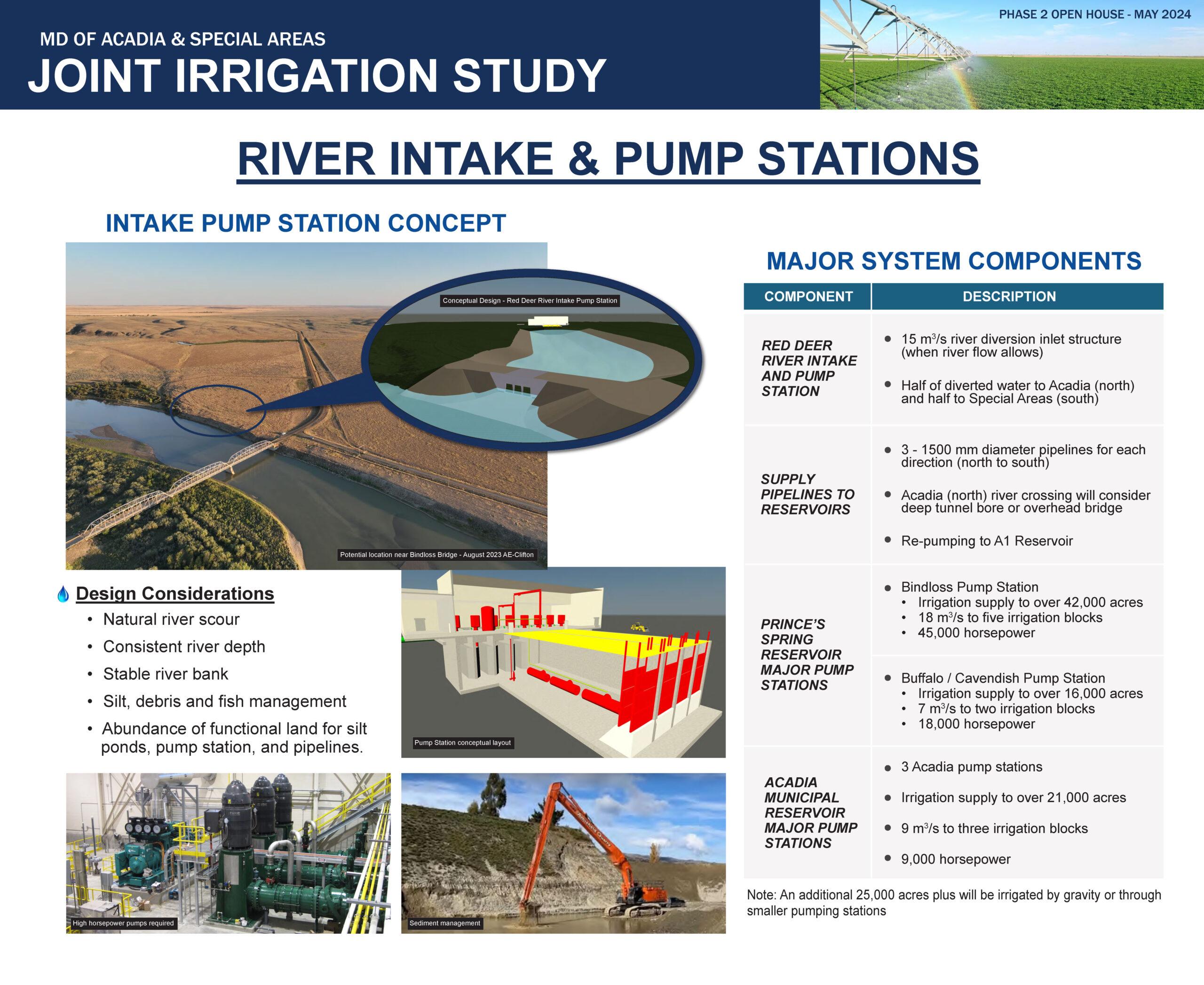
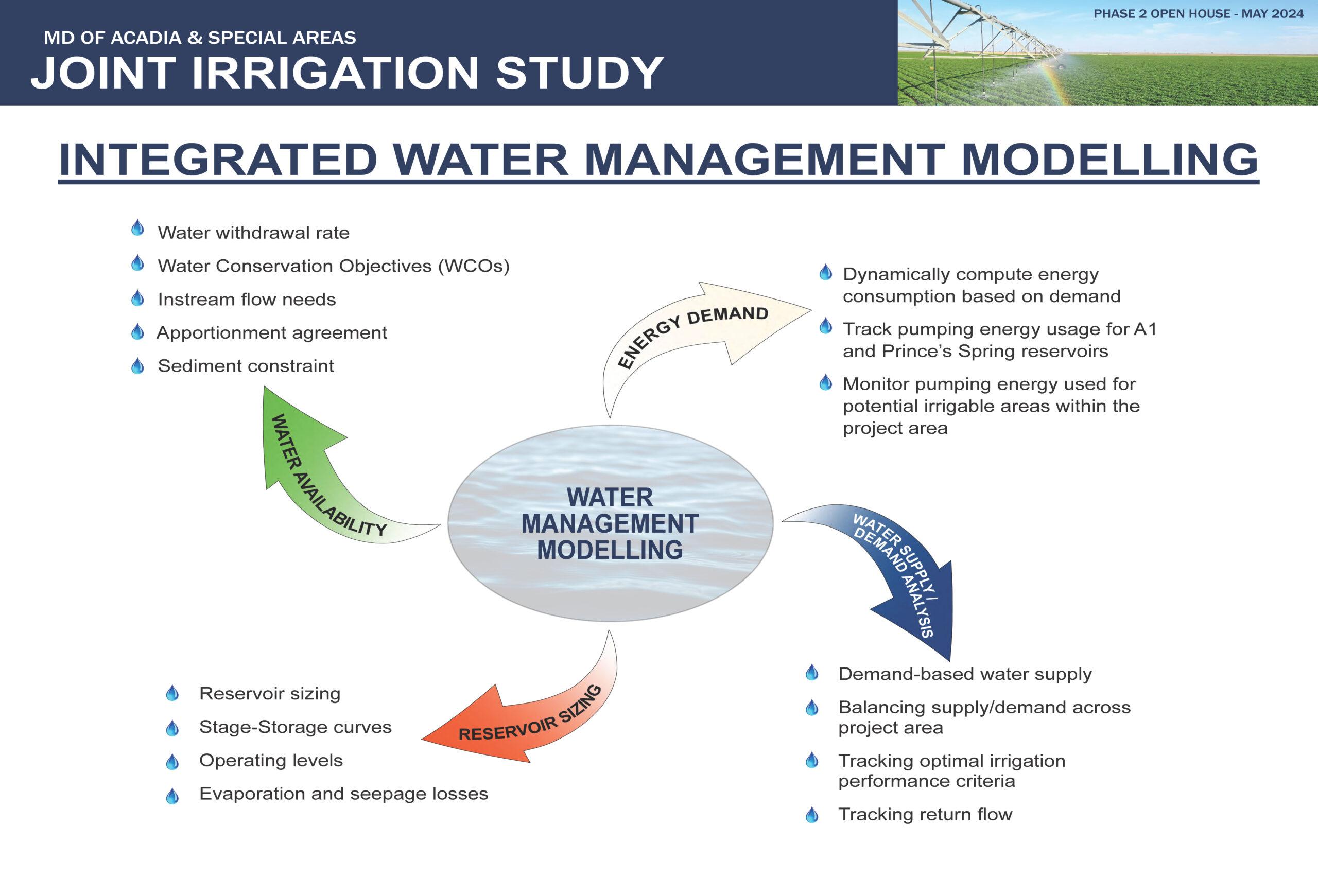
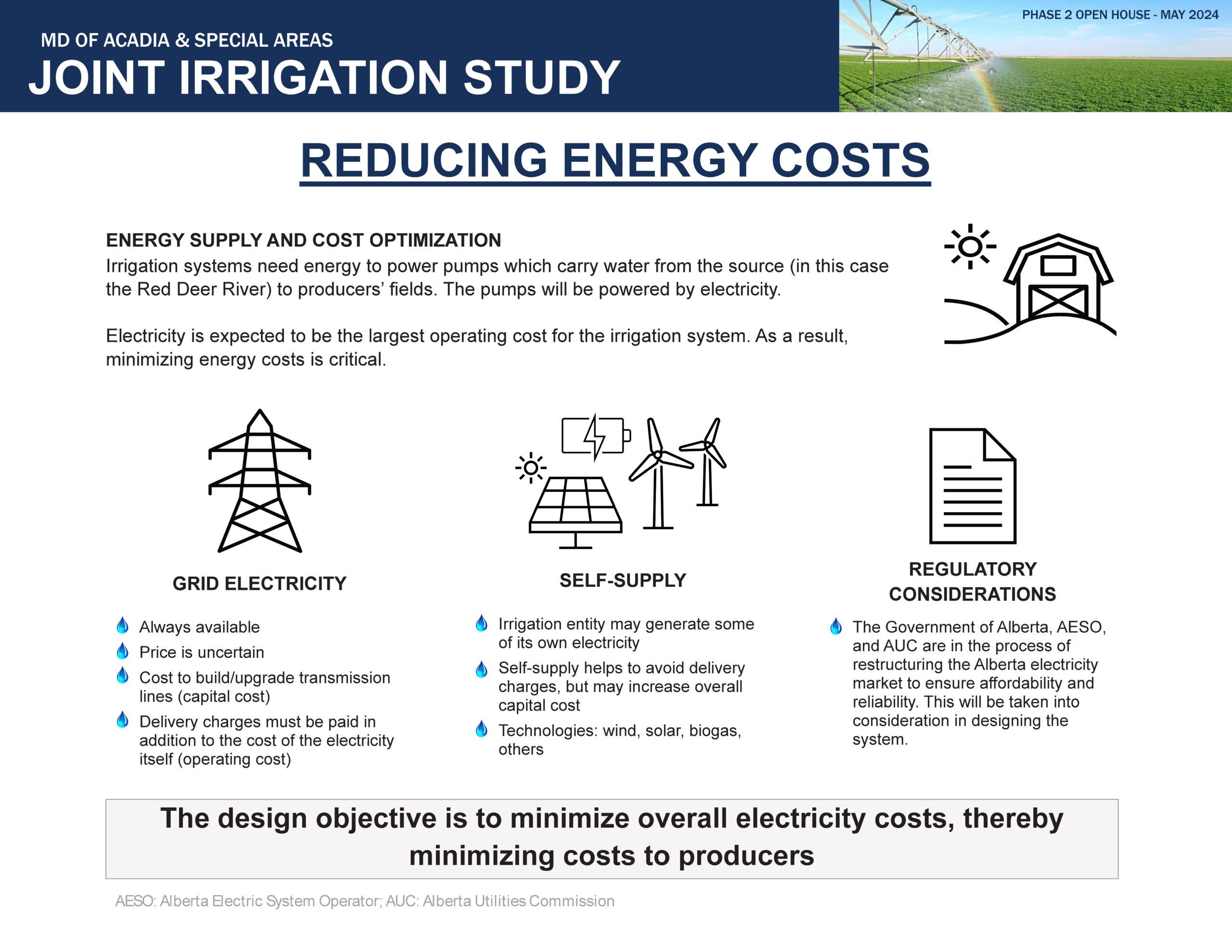
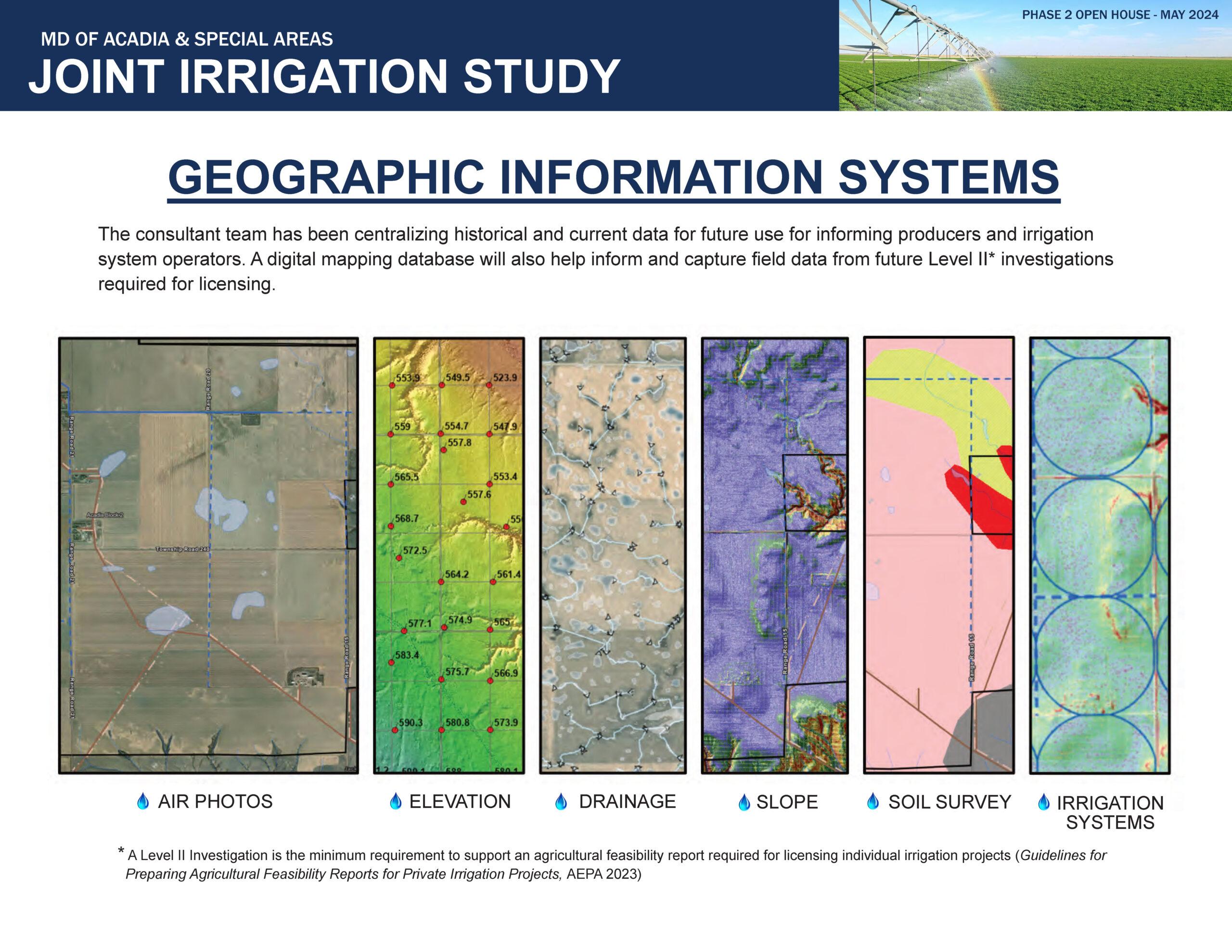
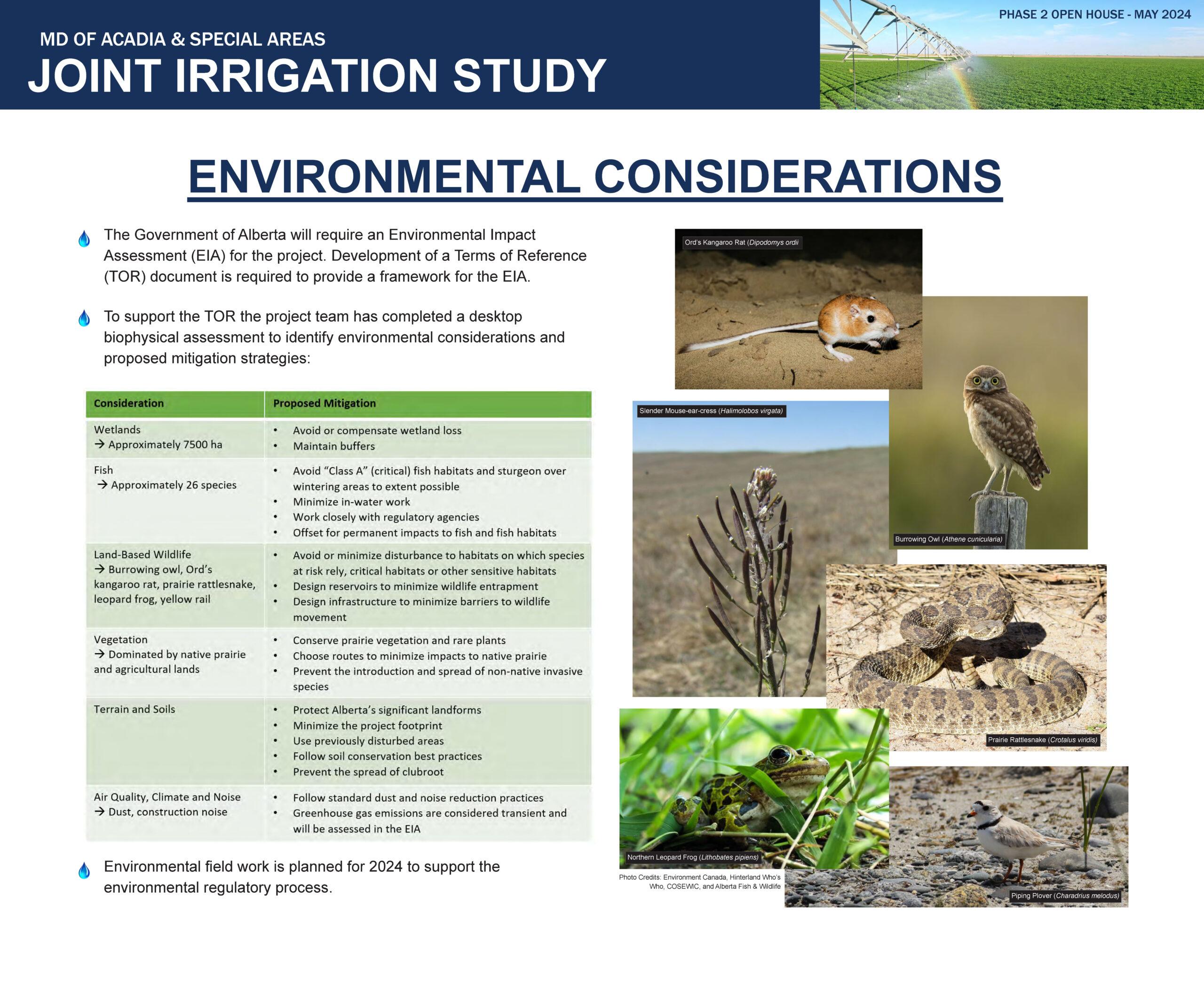
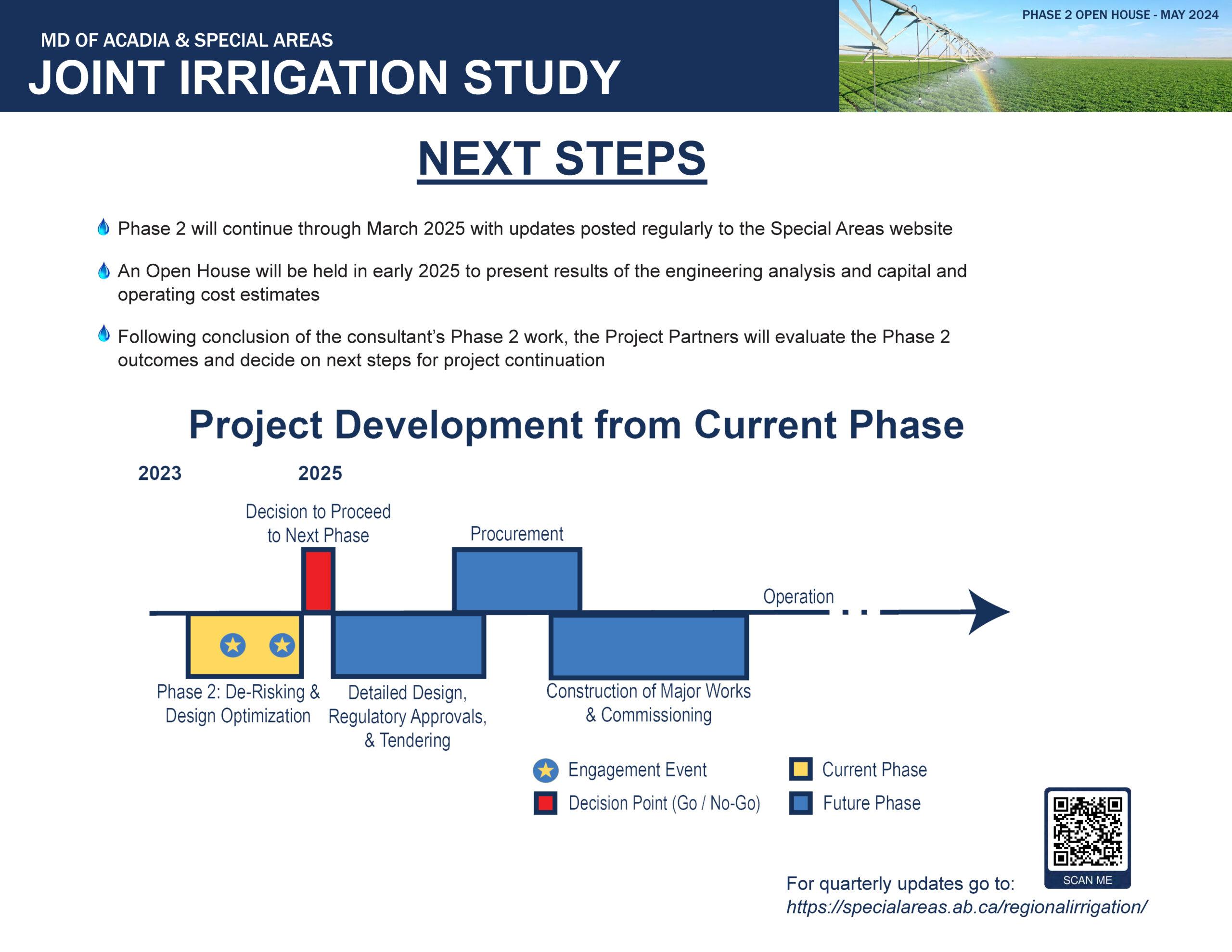
Project open houses were hosted in May 2024 to share updates on the Phase 2 project work completed, and to hear feedback on the project. Project team members were on hand to provide detailed updates on topics like crops & soils, water availability, water modelling, anticipate infrastructure, energy costs, engagement activities, and environmental considerations.


Project Information Boards – May 2024

What We Heard Report – Acadia Valley Open House