



08 Apr Spring Advisory Council Recap
Council Reviews Progress on Community Priorities and Welcomes New Director
The Special Areas Advisory Council met in Hanna on March 26 and 27 for its regular spring meeting, bringing representatives from across the region together to review ongoing initiatives and consider new priorities. Council members officially welcomed Ryley Girletz, recently promoted to Director of Municipal Services, acknowledging both his experience and his commitment.
The group reviewed follow‑up actions on motions from previous meetings. Administration provided detailed updates on topics raised by Advisory Councillors at the previous fall meeting, including:
• Additional non‑potable water storage at truck fills, which would improve service reliability during peak seasonal demand.
• Maintenance in community cemeteries, where volunteer groups and municipalities often share responsibilities.
• Feasibility work for a potential spray park at Carolside Campground, including issues related to water access, capital costs, and long-term operations.
• Advocacy for increases in walleye stocking at Blood Indian Reservoir, a priority tied to recreation, tourism, and ecological sustainability.
• Need for improved engagement at ratepayer meetings to provide direction on major initiatives like the long-term paving program and potential future tax recovery land sales.
These updates helped Advisory Council assess progress since the fall meeting and guide next steps for 2026.
Provincial Ministers Engage on Rural Challenges and Opportunities
Shaune Kovitch, Chair of the Special Areas Board, updated Advisory Council on recent discussions with Minister Dan Williams (Municipal Affairs) and Minister RJ Sigurdson (Agriculture and Irrigation) during the Rural Municipalities of Alberta spring conference.
During these discussions, Special Areas emphasized issues central to the region’s long‑term well‑being, including:
• Securing reliable water access for irrigation and agricultural production
• Identifying opportunities for partnership projects
• Navigating rising insurance, administrative, and operating costs that strain rural volunteer organizations and community halls
Minister Williams later virtually attended the Advisory Council meeting. He recognized Advisory Councillors for their commitment to local service and praised the collaborative model used in the Special Areas region – a model that brings rural and urban municipal partners together to deliver essential services more efficiently.
During discussions, Councillors asked how the Province will address unique challenges facing rural remote regions like the Special Areas, emphasizing the need for creative solutions that maximize available resources. The group highlighted how aging infrastructure, such as unused former provincial schools and hospitals, impose significant costs on municipalities when responsibility shifts from the Province. Minister Williams noted this is a growing problem across Alberta and reiterated that municipal sustainability is a major focus for his ministry.
Province Provides Update on Village of Empress Viability Review
Representatives Sharlene Brown and Denise Lines from Alberta Municipal Affairs provided an in‑depth overview of the Provincial Viability Review underway for the Village of Empress.
The review examines municipal finances, governance capacity, service levels, and long‑term sustainability.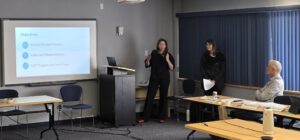
Key details included:
• The review is expected to take 12–18 months.
• A final report is anticipated in late 2026 or early 2027.
• Once the report is released, village residents will vote on whether Empress should remain a village or dissolve.
• Special Areas will continue working with the Viability Review Support Group, offering regional insight and technical expertise.
This update provided Advisory Council with clarity on timelines and Special Areas ongoing role in the process.
TransAlta Addresses Sheerness Unit 1 Mothballing and Water Supply
Duncan Webster, Manager of External Affairs with TransAlta, spoke with Advisory Council about the company’s decision to temporarily mothball Sheerness Unit 1, effective April 1, 2026.
Ratepayers in the region have expressed concern about how this change might affect both local employment and water security, since Sheerness plays an important role in regional water management.
TransAlta confirmed that water flows will be maintained at current levels and minimal impacts are expected to municipal water supplies or irrigation access for the 2026 growing season. The company is committed to using existing infrastructure as efficiently as possible; certainty around carbon pricing policy remains essential to the company for long-term planning and investment decisions.
Regional Discussions on Planning, Fiscal Health, and Shared Services
Palliser Regional Municipal Services (PRMS)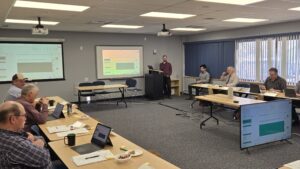
CEO Devin Diano and GIS Coordinator Elliot Hall provided a detailed overview of the technical services PRMS provides, including:
• Safety codes administration
• Municipal planning support
• GIS mapping and asset management
• Subdivision applications
Advisory Council thanked them for this orientation training, sharing how valuable it is to have one regional organization deliver these specialized services at a fraction of the cost individual municipalities would face independently.
Regional Fiscal Capacity Analysis
Ian Gray of Nichols Applied Management presented a comprehensive fiscal capacity report assessing how Special Areas’ contributions support surrounding urban municipalities. This work, which began in 2023, was intended to help Special Areas Board and Advisory Council better understand how current levels of financial supports were meeting fiscal needs.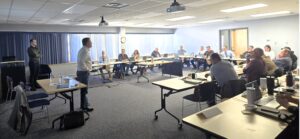
One key program reviewed was the Industrial Tax Transfer program – a program where Special Areas provides funding to towns and villages in the region from the industrial (linear) assessment base.
This program recognizes the importance of these urban municipalities in providing the services and amenities Special Areas ratepayers use.
Key findings included:
•Current funding levels, including the Industrial Tax Transfer program, are appropriate.
•The region’s cooperative approach is uncommon and strengthens both stability and competitiveness.
•Growing costs for aging municipal infrastructure will require coordinated long‑term planning.
Special Areas plans to share the report with the other municipalities in the region to support future planning and partnership discussions.
Recognition of Special Areas’ Long‑Standing Support for STARS and HALO
Glenda Farnden, Senior Municipal Relations Liaison with STARS, recognized the Special Areas Board for surpassing $500,000 in cumulative funding to STARS since 1989. This milestone reflects nearly four decades of commitment to emergency air ambulance services for residents across the region.
Special Areas currently contributes $35,000 annually to both STARS and HALO Air Ambulance, ensuring rural residents continue to have access to critical emergency medical transport. HALO, established in 2007, remains southern Alberta’s only dedicated Helicopter Emergency Medical Service, making regional financial support essential to sustaining operations.
Financial Statements Show Strong 2025 Results and 2026 Budget Priorities
Darren Jones, Director of Finance and Administration, presented the draft 2025 financial statements. In 2025, increases in linear assessment from renewable energy developments resulted in significantly higher revenue than expected, reducing the planned $9.1 million deficit to an actual deficit of $3.8 million.
Additional highlights included:
•Funds from Tax Recovery Land Sales were transferred into dedicated reserves.
•The 2026 budget continues to responsibly draw down the accumulated operating surplus.
•The paving project for Highway 899 has been deferred to 2027 to align with potential provincialcost‑sharing opportunities.
•Significant future cost pressures are expected in regional healthcare initiatives, water systemexpansions, and long-term paving commitments.
Road Program Advances with More Than 80 km of Work Planned
Brent Fecho, Superintendent of Roads and Equipment, presented the 2026 road program, which includes:
•26 km of surfacing work
•37 km of road recrowning
•21 km of construction and access road development
This plan was previously reviewed with local road committees and reflects direct input from residents. Council recommended the program move forward as presented.
Staged Surfacing Program
Aggregates Manager, Kelsey Martin, provided further details on the long‑term paving program, the final phase of the Staged Surfacing Program. Discussions with the Province are ongoing regarding partnership opportunities to pave regional secondary highways, with local projects being planned to be delivered in alternating years to balance workloads and budgets.
Information on the long-term paving program will be shared at annual ratepayer meetings this May and June.
Community Pastures: Exploring New Approaches
Trent Caskey, Director of Property Administration, briefed Advisory Council on the status of the Richdale Community Pasture.
Richdale has historically supported steer grazing, but fluctuating water levels and variable grass conditions can result in limited capacity or interest by patrons. With lower occupancy in the pasture, Advisory Council directed Administration to explore alternative models such as adjusting the pasture to support heifer grazing with later stocking dates.
Mr. Caskey also updated Advisory Council on the Buffalo Atlee Community Pasture, now operating under a three‑year pilot with the Buffalo Atlee Grazing Co‑operative. The Co‑operative handles day‑to‑day operations, while Special Areas Administration sets grazing capacity and conducts Range Health Audits to ensure responsible land stewardship.
Healthcare Recruitment and Regional Initiatives
Advisory Council received updates from Jordon Christianson, Director of Regional Initiatives, on efforts to strengthen healthcare access across the region.
Key initiatives include:
• Coordinated recruitment efforts among the region’s three medical clinic boards
• Construction of a new 14‑bed dementia and assisted-living facility in Oyen, delayed due to a spring fire but still expected to open this year
• Development of a new medical clinic in Oyen
• Renovation of a donated facility in Consort for use as a medical clinic, supported by the community and the clinic’s Nurse Practitioner team
Healthcare recruitment remains one of the most pressing challenges facing rural Alberta, and Council members stressed the need for collaborative, sustainable, long‑term solutions.
Looking Ahead to Ratepayer Meetings
During the roundtable session, Advisory Councillors shared updates from the external boards and committees they serve on. A consistent theme was the need to control costs while maintaining sustainable requisition levels for municipalities.
Spring ratepayer meetings will take place in May and June, with detailed reports and supporting material to be posted on the Special Areas website.
Learn More
To learn more about Advisory Council and Special Areas Board, visit www.specialareas.ab.ca.
Media Contact:
Maeghan Chostner
Communications Officer Special Areas Board
(403) 854-5611 / (403) 857-8047
Maeghan.chostner@specialareas.ab.ca