

22 May Not A Weed Wednesday – Seaside Arrow Grass
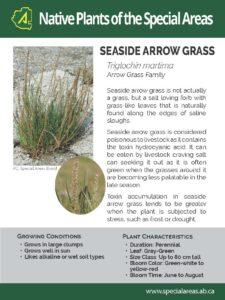
Poisonous Plant Edition- Seaside Arrow Grass (Triglochin maritima)
Seaside arrow grass is not actually a grass, but a salt loving forb with grass-like leaves that is naturally found along the edges of saline sloughs or seepages. The flower head is on its own spike amongst the leaves and is covered by “bumps” which are flowers or seed pods depending on the time of year.
Seaside arrow grass is considered poisonous to livestock as it contains the toxin hydrocyanic acid, it can be eaten by livestock craving salt, or seeking it out as is often green when the grasses around it are becoming less palatable in late season. Toxin accumulation in seaside arrow grass tends to be greater when the plant is subjected to stress, such as frost or drought.
If seaside arrowgrass is a problem in your pasture, early grazing of the affected field and ensuring mineral is available to cattle is the most practical solution. Grazing at a time the seaside arrow grass is not stressed and many other forage options are available will reduce consumption by cattle. Studies show that cattle can consume seaside arrow grass at up to 7% of their daily forage intake before it is lethal. If practical, the area could be fenced to exclude cattle.
Have questions about managing your grazing lease for poisonous species and optimal range health? Contact a Special Areas Rangeland Agrologist at (403) 854-5600.