


05 Jun Not A Weed Wednesday – Death Camas
Death Camas (Zigadenus venenosus)
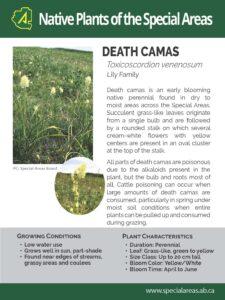
Death camas is an early blooming native perennial found in dry to moist areas across the Special Areas. Succulent grass-like leaves originate from a single bulb and are followed by a rounded stalk on which several cream-white flowers with yellow centers are present in an oval cluster at the top of the stalk.
All parts of death camas are poisonous due to the alkaloids present in the plant, but the bulb and roots most of all. Cattle poisoning can occur when large amounts of death camas are consumed, particularly in spring under moist soil conditions when entire plants can be pulled up and consumed during grazing.
Livestock poisoning by death camas tends to only be a concern in spring as mentioned above, so range management is the best method for reducing livestock loss due to death camas. Healthy ranges will have lower death camas populations with adequate desirable grass for livestock to graze allowing them to avoid consuming an excess of death camas. Grazing a field known to have high death camas populations later in the summer or fall would also allow cattle to avoid death camas populations.
Have questions about managing your grazing lease for poisonous species and optimal range health? Contact a Special Areas Rangeland Agrologist at (403) 854-5600.