

16 Jun June 16-22 Native Prairie Appreciation Week
DYK? June 16-22, 2024 is Native Prairie Appreciation Week!
Grassland ecosystems cover between 42-56 million km2 (31-43%) of the earth’s surface! They are also one of the world’s most threatened ecosystems.
Here are some fascinating facts about prairie grass adaptations from the Alberta Prairie Conservation Forum for you to chew on!
- Deep, extensive roots capture moisture & nutrients, holding sensitive soils in place. Bunch grasses can have roots up to 4 meters deep!
- Growing points of prairie vegetation are tucked in at the crown of the plant to protect themselves from wind, severe cold, hooves, fire and teeth of large herbivores.
- Narrow leaves means there is less surface area and therefore less evaporation. This gives our native plants the ability to tolerate more drought stress.
- Small flowers in dense heads allow for efficient wind pollination. The leaves are also often rolled, curled or folded to protect the stomata (leaf pores) from water loss and minimize direct sunlight.
- Tough stems & leaves hardened with silica phytoliths (or plant stones) may be an adaptation to discourage grazing animals but most herbivorous mammals on the prairies have evolved high-crowned molars that keep growing to compensate for the gritty plants!
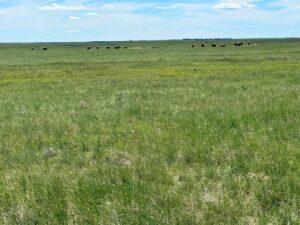
There is less than 20% of native grasslands left in western Canada. And it’s disappearing fast. But cattle are key!
Check out how you can be a Guardian of the Grasslands below with your livestock operation.
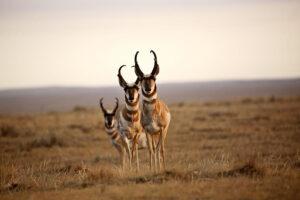
The Pronghorn
The pronghorn antelope is a well-known poster child of the Special Areas prairies, but it is threatened by habitat loss and degradation, as well as interruption of migration patterns. With only 15-20K antelope thought to be left in Alberta, Mutlisar recommends replacing old fences with double-stranded smooth bottom wires with 18” clearance, minimizing east-west cross fences when possible, and maintaining healthy native grasslands with sagebrush communities.
- While the Pronghorn’s Latin name, Antilocapra, means “goat-antelope”, they are not related to goats or antelopes. In fact, their closest living relative is the giraffe!
- Antelope have telescopic eyesight and can spot movement a kilometer away
- Hollow hairs provide insulation against the winter’s cold
- Large windpipe can help increase the energy level
- They have been clocked running at up to 86km/hr (second fastest animal on earth, next to the cheetah!)
- Its white rump patch is a signal for danger (hairs will stand on end)
- Both males & females can have horns. Males shed their horn sheaths once a year in late fall or early winter.
For more information visit: Meet Grassland Species at Risk | Multisar
Native Plants
Want to learn more about which plants are native to Special Areas? Check out the Native Plant Garden in front of the Hanna District Office for inspiration!
By incorporating native species into your garden you not only know they will be hardy to the area, but you will support, provide food/habitat for insects & invertebrates, improve soil microbe diversity and reduce water consumption compared to introduced species!
The Alberta Native Plant Council has great resources to get you started! Growing Native Plants – Alberta Native Plant Council (anpc.ab.ca)
A few friendly reminders though, first:
- Don’t buy “wildflower mixes” unless they are from a reputable grower, list all species by latin name and you double check the species are suitable to the area. Many of these mixes contain noxious, invasive species. Instead, purchase or collect native seed or started plants from reputable sources.
- Do not dig up native plants- we want to conserve Alberta’s native plant habitats!
- If collecting native seed be sure you have permission from the landowner, know how to store seeds properly and never collect all the seeds from a single plant. Only ever collect 10% of the seeds to ensure natural dispersal of the population will continue.
Ornamental escapes can become very invasive to our surrounding grassland ecosystem and threaten our native prairie. Our Ag Service Dept has helped managed escapees from baby’s breath, blueweed, dames rocket, yellow clematis, yellow toadflax and purple loosestrife to name a few. The Invasive Species Council of BC has a great Grow Me Instead Brochure to help guide your ornamental choices to lessen the invasive impact to our natural ecosystems.

The Little Brown Bat
Native prairies within Special Areas are home to many species at risk, one being the little brown bat (Myotis lucifugus), now federally endangered in Canada. The little brown myotis commonly roosts in old trees, rock-crevices, caves and can even be found under some bridges in Special Areas!
To learn more about how you can protect these mosquito-eating friends visit Resources – Alberta Community Bat Program (albertabats.ca) or try building your own bat house! Canadian Wildlife Federation: Bat House in Your Backyard (cwf-fcf.org)
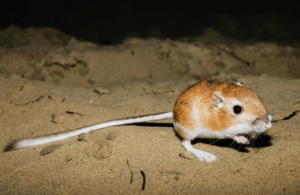
Ord’s Kangaroo Rat
Images of antelopes, rattlesnakes and grouse usually fill our minds when talking about grassland animals that call Special Areas home, but what about Alberta’s Ord’s Kangaroo Rat (Dipodoyms ordii)? This endangered species is a prairie rarity- it depends on open, sparsely vegetated sand dunes that prairie fires and plains bisons created naturally on the prairie in sensitive soil areas. In the far SE corner of Special Areas our grassland ecosystem is supporting this endangered species.
For more information visit: Alberta’s Ords kangaroo rat (Dipodomys ordii) : endangered – Open Government