



27 Jun Blue Green Algae in the Special Areas
A blue-green algae (cyanobacteria) bloom has been identified at Blood Indian and Little Fish Lake and signage has been posted at these locations.
Please take the following precautions if you are visiting these bodies of water:
- Avoid all contact with blue-green algae blooms. If contact occurs, wash with tap water as soon as possible.
- Do not swim or wade, or allow your pets to swim or wade in any areas where blue-green algae is visible.
- Do not feed whole fish or fish trimmings from this lake to your pets.
- Consider limiting human consumption of whole fish and fish trimmings from this lake, as it is known that fish may store toxins in their liver. (People can safely consume fish fillets from this lake).
- Do not use water contaminated with blue-green algae to water edible plants. This is particularly important for plants with edible parts exposed to the ground surface (such as cabbage, lettuce, tomatoes, and other salad vegetables).
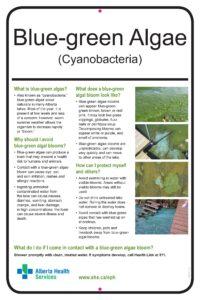
Visitors and residents are reminded to never drink or cook with untreated water directly from any recreational body of water at any time. Boiling of this water will not remove the toxins produced by blue-green algae. An alternate source of drinking water should also be provided for pets and livestock while this advisory is active.
Cyanobacteria is naturally occurring and often becomes visible when weather conditions are calm. Appearing like scum, grass clippings, fuzz or globs on the surface of water, blue-green algae can be blue-green, greenish-brown, brown, and/or pinkish-red, and often smells musty or grassy.
People who come in contact with visible blue-green algae or who ingest water containing blue-green algae may experience:
- skin irritation
- rash
- sore throat
- sore red eyes
- swollen lips
- fever
- nausea
- vomiting and/or diarrhea
Symptoms usually appear within one to three hours and resolve in one to two days. Symptoms in children are often more pronounced; however, all humans are at risk of these symptoms. Exposure to the bacteria may be fatal to pets.
Please visit Alberta Health Services for more information.