


26 Apr The Ferruginous Hawk
Common name: Ferruginous Hawk
Latin name: Buteo regalis
Conservation Status: Threatened
Range: Alberta, Saskatchewan, Manitoba
Lifespan: 20 years or more. The oldest recorded age is 23 years and 8 months
Size: Wingspan of 133-142 cm, head-to-talon length of 56-69cm, weight of 0.97-2.1kg, females are larger
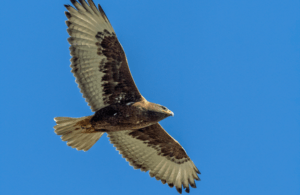
Source: Nature Canada © to Doug Greenberg on Flickr, used under Attribution-NonCommercial 2.0 Generic
The Ferruginous Hawk comes in a light and dark colouration. The light colouration has a white belly, while the dark colouration is a dark brown on its back and stomach. Both have white on the underside of their wings. The light colouration also has a brown-feathered “V” along the underside of its legs and tail.
Threats?
The Ferruginous Hawk population in North America is now only a quarter of what it was in the early 1900’s, and its range is only half of what it was in the past. The loss of and fragmentation of its habitat, native grasslands, are a serious threat to the population. Ferruginous Hawks also suffer from a lack of nest sites as more and more trees are cut down in their habitat. They are also threatened by human activity and the loss of prey, particularly Richardson’s ground squirrel.
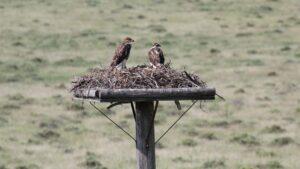
Source: Journalstar
• Eats mainly rodents, but will eat what’s available, including: small to medium-sized mammals, smaller birds, snakes, and large insects
• Is the largest hawk in North America
• Catches prey by using the “sit-and-wait” method – they wait on the ground outside the prey’s den
• Courtship involves dancing in the sky, diving on the part of the male, and the pair spiraling towards the ground holding each other’s beaks and talons
• Use things like sticks, shrubs, shredded bark, and cow dung to make nests. In the past, they also used bison hair and bones
• Its name, “ferruginous,” refers to the hawk’s rusty colouring
This goal will help protect ecosystems, restore habitats, and fight climate change. All these things are a step in protecting Canada’s at-risk animals.